
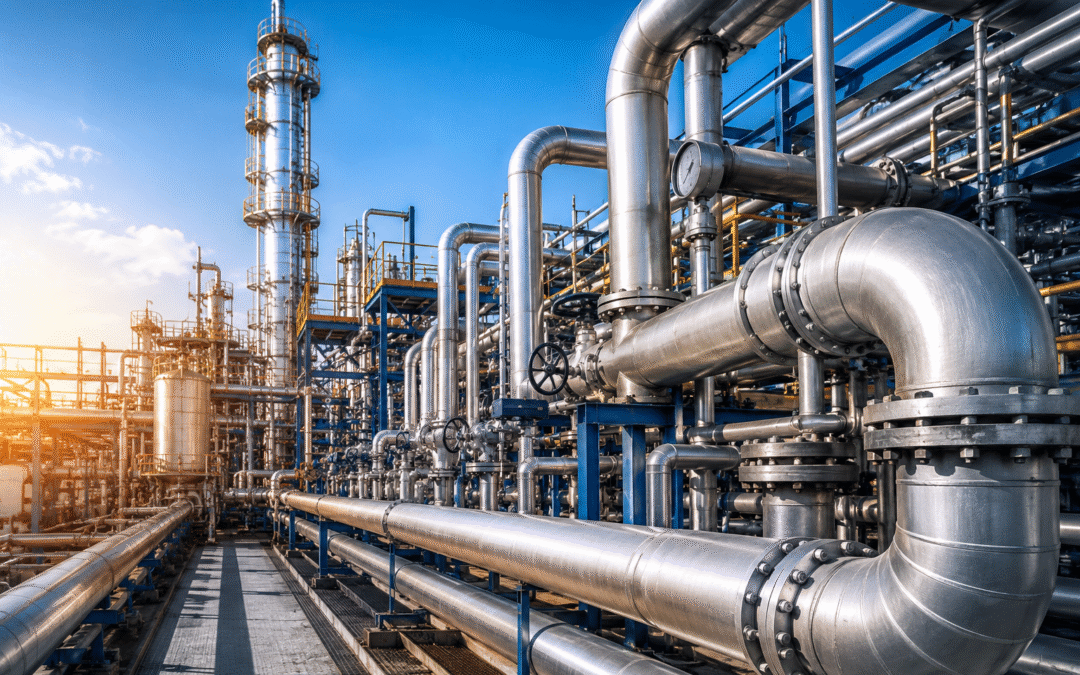
What is Industrial Piping?
Industrial plumbing refers to the pipes, fittings, and valves used in industrial facilities to carry fluids, gasses, and other products. It is an essential component of many businesses, including production, processing, and distribution. Industrial plumbing systems are intended to endure high pressures, temperatures, and corrosive conditions, ensuring that fluids are transferred safely and efficiently.
Industrial piping systems can be constructed from a range of materials, including stainless steel, copper, PVC, and cast iron. The material used depends on the application, temperature range, and chemical makeup of the fluid being conveyed. Fittings and valves link pipes and control fluid flow, whereas sensors and transmitters monitor system functioning.
Industrial pipework is utilized in a variety of industries, including:
Oil and gas refining
Chemical processing
Power generation
Water treatment
Food processing
Pharmaceutical manufacturing
Industrial pipe systems must be designed and installed with specialized knowledge and expertise to assure their safety and efficiency. Proper maintenance and inspection are also necessary to avoid leaks, corrosion, and other problems that could jeopardize the system’s performance.
Types Of Pipes Used In The Industry
The sector relies significantly on a variety of pipes to convey fluids, gasses, and solids. Understanding the many types of pipes and their distinct properties is critical for choosing the best material for a given project or application. In this section, we’ll look at pipes and how they’re used in various sectors.
Steel Pipes
Steel pipes are among the most popular types of pipes due to its durability, resistance to corrosion, and ability to endure high temperatures and pressures. They are composed of carbon steel or stainless steel, with the latter being more corrosion resistant and suitable for marine applications. Steel pipes are widely utilized in oil and gas pipelines, water supply systems, and industrial applications.
PVC Pipes
Another popular form of pipe is PVC (polyvinyl chloride), which is noted for being lightweight, flexible, and corrosion-resistant. They are commonly utilized in plumbing, irrigation, and sewage treatment facilities. PVC pipes are also employed in construction projects, such as plumbing and drainage systems. Their elasticity makes them perfect for applications requiring bends and curves.
Copper Pipes
Copper pipes are extremely conductive and resistant to corrosion, making them ideal for water supply lines and HVAC systems. They are also noted for their longevity and dependability, making them an attractive option for older structures that still employ copper.
Other Types of Pipes
Steel, PVC, and copper pipes are not the only materials used in diverse sectors; cast iron, aluminum, and fiberglass are also common. Cast iron pipes are widely utilized in sewage systems due to their longevity and resistance to corrosion. Aluminum pipes are lightweight and corrosion-resistant, making them excellent for situations where weight is a factor. Chemical processing industries employ fiberglass pipes because they are corrosion and chemical resistant.
Common Piping Problems and Solutions: The Importance of Piping Design Engineering.
Piping systems can meet problems that degrade their performance. Common pipe issues include:
Leaks and corrosion
Incorrect sizing and material selection
Poor installation and maintenance
Inadequate support and anchoring
To solve these concerns, piping design engineers must use a variety of methodologies and strategies. Several solutions include:
Conducting comprehensive system analysis and simulation to identify potential difficulties.
Choosing the appropriate materials and dimensions for pipes, fittings, and valves
Implementing appropriate installation and maintenance methods
Providing enough support and anchoring to avoid pipe movement and vibration.
Effective piping design engineering requires a thorough understanding of fluid dynamics, material properties, and system behavior. Piping design experts can use these concepts to construct systems that are resilient, efficient, and reliable. In addition, frequent inspections and maintenance are essential for identifying and addressing concerns before they become severe problems.
Piping design experts can help to improve the safety, efficiency, and durability of piping systems once they are operational by recognizing typical piping concerns and solutions, as well as specific industry requirements, and by using proven CAD tools.
Newzel Industries is your trusted partner in industrial piping engineering.
Are you looking for a trustworthy and professional industrial piping design partner to help you bring your project to life? Look no further than Newzel Industries. Our team of professionals offers full design engineering services to help you overcome the problems of your piping project.
