
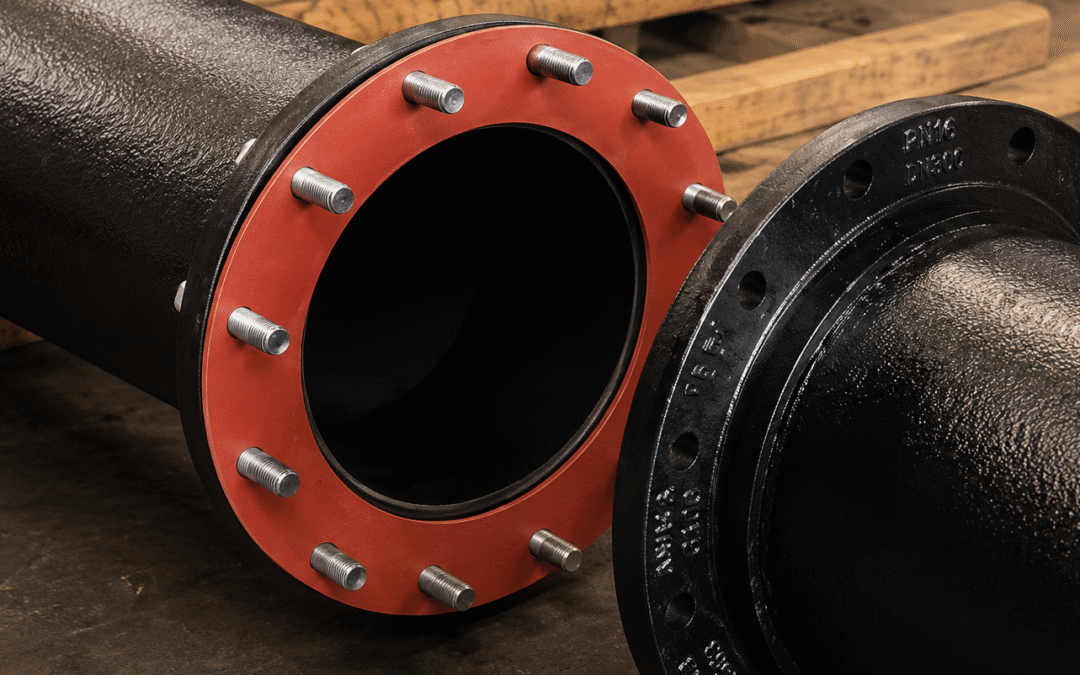
Gaskets are a crucial component of many industries, with the purpose of sealing joints to prevent leaks or resist pressure. Gaskets are available in a variety of materials and designs to suit specific applications, including automotive engines and industrial appliances. In this detailed overview, we’ll look at the many gasket types, materials, and applications.
Types of Gaskets in Piping
1. Flat gaskets:
Flat gaskets, as the name implies, are basic, flat sheets made of rubber, cork, or paper. They are commonly employed in low-pressure applications that require a smooth and flat sealing surface. Flat gaskets are widely used in household plumbing, automobile engines, and electrical enclosures.
2. Spiral wound gaskets:
Spiral wound gaskets are made by winding a metal strip and filler material (often graphite or PTFE) in a spiral pattern. This construction provides resistance and strength, making spiral coiled gaskets ideal for high-pressure and high-temperature applications. They are widely utilized in pipelines, heat exchangers, and boilers.
3. Ring Joint Gaskets:
Ring joint gaskets are metal gaskets with octagonal or oval cross sections. They are generally utilized in high-pressure applications, including as oil and gas pipelines, where they provide exceptional sealing performance even in harsh conditions. Ring joint gaskets require careful machining of the flange surfaces to work well.
4. Rubber Gaskets:
Rubber gaskets, whether composed of neoprene, silicone, or EPDM, are noted for their flexibility and robustness. They are widely employed in various industries, including automotive, aircraft, and HVAC systems. Rubber gaskets effectively seal against water, air, and other fluids, making them useful for a variety of applications.
5. Metal Gaskets:
Metal gaskets, often constructed of stainless steel, copper, or aluminum, are extremely durable and resistant to extreme temperatures and pressures. They are frequently utilized in environments where other gaskets would fail, such as chemical processing plants, power production facilities, and aerospace equipment.
6. Elastomeric Gaskets:
Elastomeric gaskets combine the flexibility of rubber with the strength of metal. They are made of layers of rubber and metal to give excellent sealing performance in harsh situations. Elastomeric gaskets are utilized in applications that require both flexibility and durability, such as automotive engines, refrigeration systems, and hydraulic equipment.
7. Camprofile Gaskets:
Camprofile gaskets have a serrated metal core and a nonmetallic sealing substance bonded to the surface, such as graphite or PTFE. This design provides good compression and recovery properties, making cam profile gaskets appropriate for applications with varying temperatures and pressures. They are widely utilized in heat exchangers, flanged joints, and pressure vessels.
8. Cork Gaskets:
Cork gaskets are produced from compressed cork, which is noted for its inherent flexibility and toughness. These gaskets are widely utilized in applications that require resistance to oil, gasoline, and other fluids. Cork gaskets are used in automotive engines, transmission systems, and fuel pumps because of their superior sealing characteristics and ability to endure vibration and temperature variations.
9. Graphite Gaskets:
Graphite gaskets are made up of layers of graphite sheets or foil connected with metal inserts. These gaskets are extremely resistant to high temperatures, chemicals, and pressure, making them ideal for harsh environments encountered in sectors such as petrochemical, refining, and power generating. Graphite gaskets provide dependable sealing performance in flange connections, valves, and pumps, where tight seals are critical to operating efficiency and safety.
10. PTFE Gaskets:
PTFE (polytetrafluoroethylene) gaskets, often known as Teflon gaskets, are well known for their high chemical resistance, reduced friction, and nonstick qualities. PTFE gaskets are utilized in businesses that use caustic chemicals, medicines, and food processing, where contamination and product purity are critical. These gaskets provide outstanding sealing performance in harsh conditions like acids, solvents, and high temperatures, ensuring leak-free operation and product integrity.
Conclusion
Gaskets serve an important function in maintaining the integrity and efficiency of many mechanical systems throughout industries. Understanding the many types of gaskets and their applications is critical for picking the best gasket for your unique sealing needs. Whether sealing a simple pipe joint or storing high-pressure fluids in a complicated industrial process, selecting the right gasket can mean the difference in guaranteeing safety, dependability, and performance.
Need high-performance Industrial Gaskets for your piping and engineering applications? Trust Newzel Industries for premium-quality gaskets, reliable sealing solutions, and industrial-grade performance built for the toughest environments. Contact Newzel Industries today and get the right solution for your project.
