
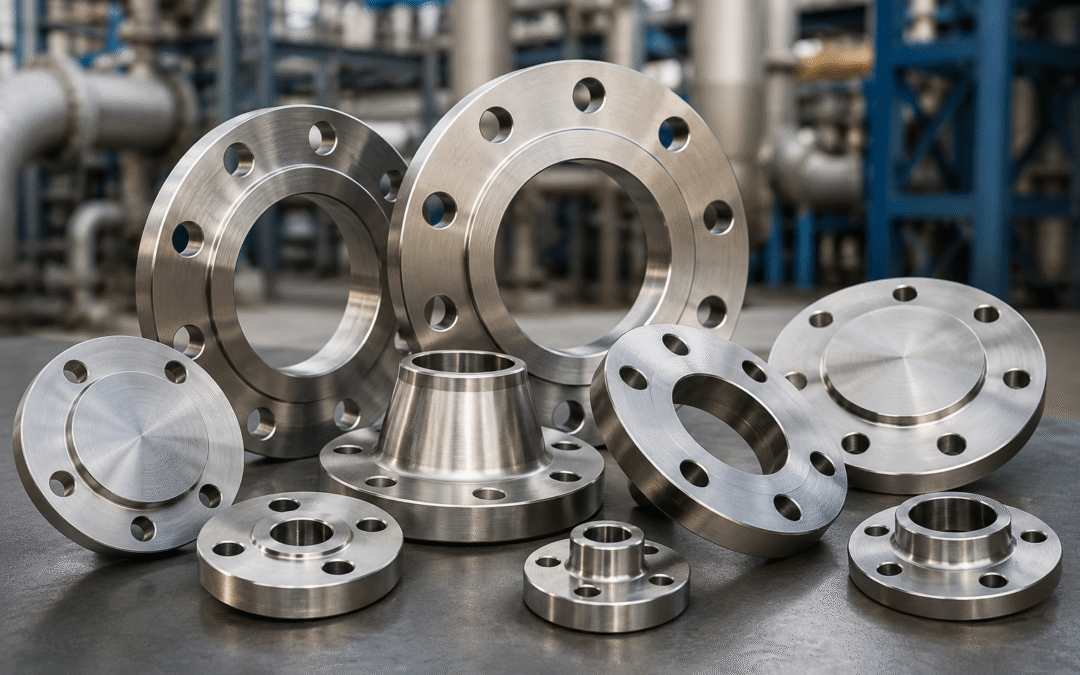
The ASME B16.5 standard is significant in the piping systems industry because it specifies the design and standards for stainless steel flanges and flanged pipe fittings. This standard ensures the interoperability and interchangeability of flanges across multiple sectors.
What is ASME B16.5?
It is a standard developed by the American Society of Mechanical Engineers.It describes the standards for pipe flanges and stainless steel pipe fittings.This standard is essential for preserving the integrity of piping systems.
This document covers flanges for nominal pipe sizes from ½ inch to 24 inches.
It includes dimensions, tolerances, and material specifications.These standards ensure that the flanges can resist specified pressure and temperature conditions.
Key Features of ASME B16.5
Interchangeability and Compatibility of Flange
Pressure and Temperature Rating
Flanging Material Specifications:
Engineers rely on this standard to construct and maintain pipe systems.It provides a structure to ensure safety and efficiency.Industries that adhere to ASME B16.5 reduce the risk of system breakdowns and improve the durability of their operations.
Scope and Applications for ASME B16.5 Flanges
ASME B16.5 is applicable to pipe flanges and fittings globally.This includes, but not limited to:
Oil & Gas
Chemical Processing
Power Generation
Flanges are used to connect pipes, valves, and other components in piping systems.They ensure system integrity while successfully preventing leaks and malfunctions.Engineers embrace this standard because it simplifies installation and maintenance procedures while ensuring reliable equipment performance.
ASME B16.5 Flange Pressure Ratings
Classes: 150, 300.
Classes: 600, 900, 1500, and 2500.
Key Specifications and Dimensions
ASME B16.5 covers flanges with nominal diameters ranging from ½ to 24 inches.Each specification comprises parameters that are specifically matched to industry requirements.This standardization streamlines design and procurement procedures across multiple industries.
The standard is built around pressure-temperature ratings, which define the maximum pressure that a flange can withstand at various temperatures.These ratings guide engineers in selecting appropriate flanges for various operating circumstances.
ASME B16.5 Flange Critical Dimensions
Dimensions include flange diameter, bolt hole diameter and pitch, flange thickness, and raised face height.
Material and Flange Types
ASME B16.5 specifies important materials that impact flange performance.Various materials are suitable for varied climatic and pressure situations.Selection must strike a balance between strength and corrosion resistance.
Carbon steel, stainless steel, and alloy steel are examples of commonly used flange materials.
Carbon steel is cheap in everyday applications.
Stainless steel provides high corrosion resistance.
Alloy steel offers excellent strength in demanding service circumstances.
Flange Types:
Weld Neck Flange
Slip-On Flange
Threaded Flange
Flange types include socket weld, blind, and lap joint.
Flange Face Types and Markings
The face type of a flange influences its sealing capabilities. ASME B16.5 specifies many face styles to accommodate various gasket materials. Choosing the appropriate face is essential for preventing leaks.
Raised face.
Flat face
Ring-type joint.
Testing, Quality, and Compliance with ASME Standards
Testing is an important part of ASME B16.5 flanges to ensure safety and performance. Rigorous testing techniques exist to ensure flange durability and resistance. Proper testing ensures that flanges satisfy the requirements of different situations.
Quality tests include many methods to assure flange integrity:
Dimensional Inspection
Material verification
Pressure tests
Why does ASME B16.5 matter in industry?
ASME B16.5 has a wide range of applications. It guarantees the safe and efficient operation of piping systems. Its standards prevent breakdowns under high-pressure and high-temperature circumstances.
The main reasons for its relevance are:
ensures compatibility and interchangeability.
decreases the chance of leaks and malfunctions.
promotes safety and reliability in design.
Adherence to ASME B16.5 is critical for the integrity of industrial systems. It helps engineers develop and analyze pipe frameworks effectively. This standard instills confidence in producers and end users by ensuring quality and performance in their operations.
