
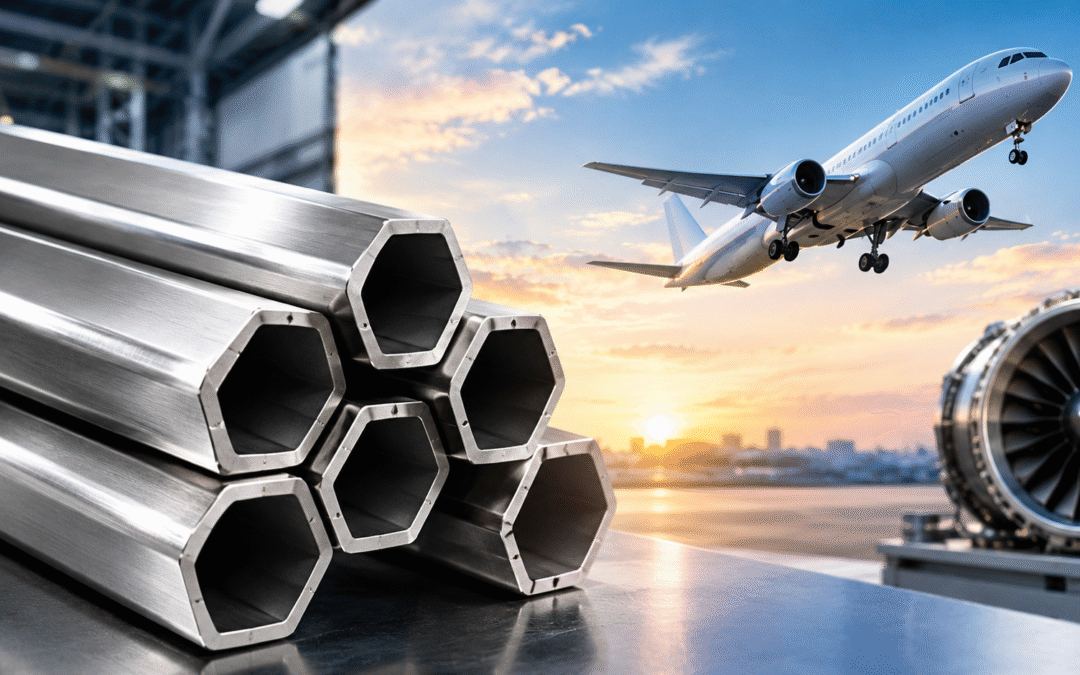
The use of stainless steel hexagonal pipes in the aerospace industry is increasing. These pipes are used to move various materials from one point to another. Stainless steel hexagonal pipes are noted for their geometric solid structure, which increases the product’s overall strength. They also have high corrosion resistance and are lightweight.
Benefits of Aerospace Industries
Corrosion Resistance
Stainless steel hexagonal pipes are commonly utilized in the aerospace industry. These pipes are corrosion resistant and can tolerate high pressures, temperatures, and corrosive conditions. They can be utilized in a variety of aerospace applications, such as avionics, satellites, and spacecraft. They are also utilized to transfer liquids and other substances.304 stainless steel is one of the most frequent alloys utilized to manufacture these pipes. It has at least 11% chromium and can withstand corrosion and rust in most settings.
High strength.
Stainless steel hexagonal pipes are employed in the aerospace industry due to their great strength. They are also widely utilized in various industrial applications that require strong and durable pipes. They have a greater inertia moment, section modulus, flexural and torsional resistance than circular tubes. These advantages make them perfect for mechanical components, tools, and structural applications.
Stainless steel hexagonal pipes are ideal for specialized engineering tasks requiring great strength, durability, and toughness. They come in welded and seamless versions in a variety of diameters, shapes, and metals. They are easy to manufacture and extremely resistant to corrosive conditions.
Light weight.
Stainless steel hexagonal pipes are widely utilized in the aerospace industry. They are lighter than circular pipes and can be welded together to create different shapes. They can also restore their shape after being subjected to heat.
This makes them appropriate for applications involving harsh temperatures and stress. The hexagonal pipe has six equal sides and a strong geometric structure, which increases its strength. It is a good choice for fluid flow control systems and hydraulic pressure pipelines.
Easy to weld.
One of the primary advantages of using stainless steel hexagonal pipes in the aerospace industry is their ease of welding. This makes them an attractive option for structural applications. Stainless steel hexagonal pipes can be welded using a variety of processes, including TIG, MIG, and flux-cored arc welding (FCAW). Each type has advantages and disadvantages, so choosing the right weld material is critical.
Stainless ERW pipes are created by rolling a metal strip and welding it longitudinally along its length. In a tube mill, the strip is gradually changed into a tubular shape before being welded with specially designed welding equipment.
Applications for Stainless Steel Hexagonal Pipes
Hexagonal pipes are utilized in a variety of applications, including fluid flow control and hydraulic pressure pipes. They can also help improve the strength of structures. The aircraft sector commonly uses stainless steel hexagonal tubes. They have excellent corrosion resistance and can tolerate intense temperatures and pressures.
Stainless steel hexagonal tubes can be cold drawn, welded, extruded, or hot rolled. They also come in a variety of sizes and thicknesses. Tensile, yield, and elongation tests are commonly performed on stainless steel hexagonal tube. They can also be tested for flexibility using a flattening test. These tests are critical for ensuring that the product fulfills particular strength requirements.
