
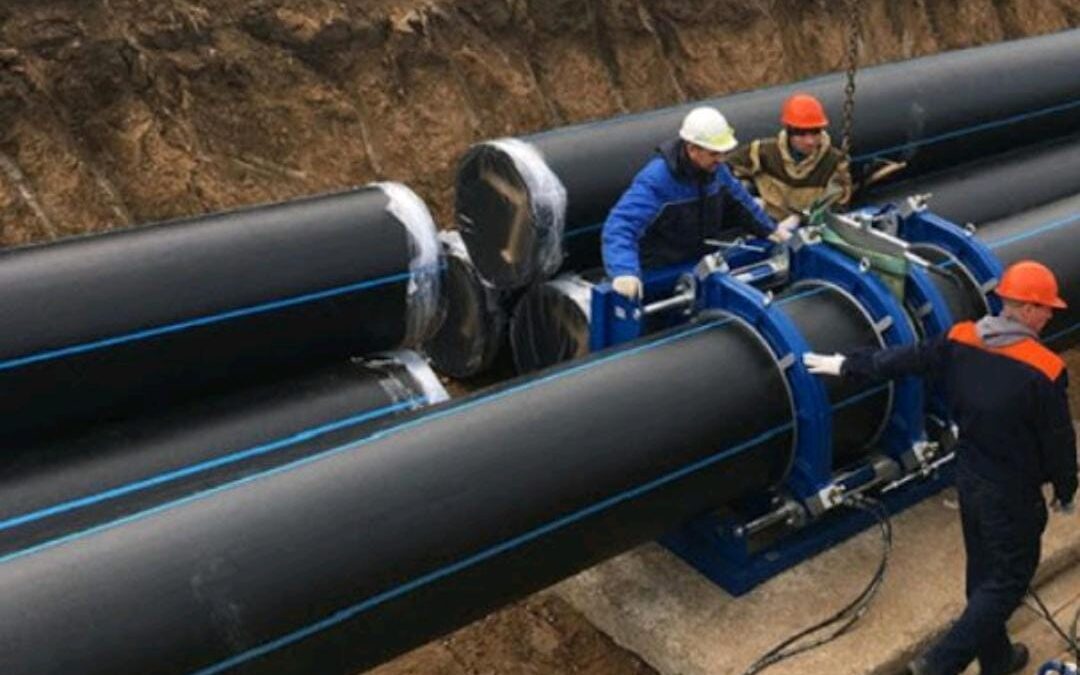
HDPE (High-Density Polyethylene) pipes are thermoplastic pipes known for:
- High chemical resistance
- Flexibility and durability
- Corrosion-free performance
- Commonly used for water, gas, slurry, and chemical transport in oil & gas facilities
Key Characteristics
- Corrosion Resistance:
Unlike steel, HDPE does not rust or corrode.
- Flexibility:
Can handle ground movement and seismic activity.
- Lightweight:
Easier to transport and install compared to metallic pipes.
- Durability:
Long service life (50+ years under proper conditions).
- Leak-Free Joints:
Achieved through fusion welding (butt fusion, electrofusion).
Joining Methods for HDPE Pipes
- Butt Fusion Welding (Typically 200–220 °C; some standards specify 195–220 °C)
Most common method.
Ends are heated and fused under pressure.
Provides a strong, leak-proof joint.
- Electrofusion
Uses fittings with embedded heating coils.
Ideal for repairs and confined spaces.
- Socket Fusion
Pipe and fitting are heated and joined.
Used for smaller diameters.
- Mechanical Couplings
Quick installation without welding.
Used for temporary or emergency connections.
Role in Oil & Gas Field
- Pipeline Networks:
HDPE is used for transporting water, chemicals, and sometimes low-pressure gas.
- Corrosion Resistance:
Unlike steel, HDPE does not corrode, making it ideal for aggressive environments.
- Flexibility:
Handles ground movement and seismic activity better than rigid pipes.
- Cost Efficiency:
Lower installation and maintenance costs compared to metallic piping.
Applications:
Firewater systems
Cooling water lines
Chemical injection lines
Drainage and sewage systems
For any kind of steel pipes – Choose Newzel Industries
